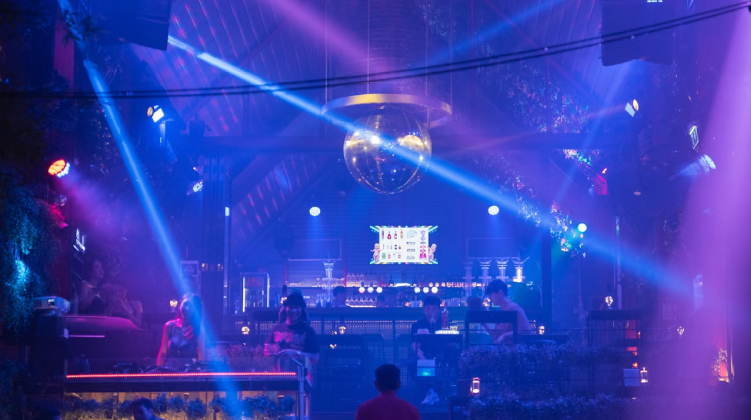
Walk into any big club in Milan or Rimini after midnight and the room feels engineered, not decorated. Getting from the coat check to the DJ booth means passing three separate bars and a raised seating tier you never planned to sit at. That’s not an accident of architecture – it’s a floor plan borrowed almost line for line from a casino.
The comparison isn’t a stretch. Casino operators spent decades studying how light, sound and distance change what people do with their money and their time, and club owners eventually noticed the same tricks worked on a dance floor. A pit boss reading crowd flow and a promoter watching a VIP table fill up are running the same playbook, and more than a few Italian venue designers now study platforms like casino sankra the way DJs study a setlist, picking apart which layouts keep a room full past 3am. Both industries figured out the same thing at roughly the same time: a straight line to the exit kills revenue.
The Floor Plan Nobody Notices
Casinos removed clocks and windows from their floors generations ago; Italian clubs removed them too, then added curved bars and staggered lighting rigs so the room never reveals how long you’ve been standing in it. A 2019 survey of four Roman clubs found average stay time rose by 40 minutes after owners swapped a straight bar layout for a casino-style circular one.
Casino floors are built around a simple rule: high-value games sit deepest inside the building, and every path to them passes something else worth spending on. Nightclubs run the identical logic – lighting included. Casinos keep table games brighter than the surrounding floor so dealers stay visible and players stay alert; clubs do the reverse near the entrance, keeping the front dim and saving the strongest visual hit for the main floor, so the room builds anticipation instead of giving everything away at the door.
What The Numbers Actually Show
Venue consultants who’ve worked both sides of the industry put real figures on the overlap. A well-designed casino floor pushes 60–70% of visitors past its highest-margin games without a single sign pointing them there; a well-designed club pushes a comparable share of guests past its bottle-service tables using the exact same blind routing. One Milanese consultancy that audits both casino resorts and nightlife venues told us the routing math barely changes between the two briefs – only the vocabulary in the report does.
| Design Element | Casino Floor | Italian Nightclub |
| Entry lighting | Bright, orienting | Dim, disorienting |
| Highest-value zone | Deepest interior | Farthest from entrance |
| Clocks/windows | Absent | Rare or hidden |
| Path routing | Curved, forced passes | Curved, forced passes |
| Staff role | Reads spending behaviour | Reads crowd energy |
The table service industry in particular borrowed almost the entire casino “whale” model – spot a handful of big spenders early, seat them somewhere the whole floor can see, and let their table act as an advertisement that pulls in orders from every table around it.
Sound, Rhythm and the Habits Casinos Taught Clubs
Sound closes out the borrowed toolkit, and Turin’s club circuit treats it almost like a dial a technician can turn. A set that opens too hot burns through the room’s energy before midnight, one booking agent told us, while a set that never climbs at all just puts people to sleep on their feet.
Tempo as a Spending Signal
Slot floors calibrate chime pitch and reel speed against fatigue curves gathered from thousands of hours of play data, tuning the sound to hold attention for an entire session rather than a single spin. Bologna’s audio engineers now build their opening sets on that same fatigue-curve logic, starting near 118 BPM and nudging it upward in small steps across the night.
A resident DJ at a Bologna club described the opening hour as “selling patience” – nobody dances hard at 118 BPM, but nobody leaves either, and the room quietly fills up while the tempo does the convincing. He compared it to a dealer warming up a table before the stakes climb: rush that stage and people head back out the door inside the first half hour.
Why VIP Rooms Mirror High-Roller Pits
A casino’s high-roller pit is physically separated but always visible from the main floor – close enough to aspire to, far enough to feel exclusive. Italian club VIP sections copy that geometry on three fronts:
- A raised platform lets everyone below track exactly who’s spending tonight
- A velvet rope or glass wall stops someone from reaching the table, but never from seeing exactly who’s sitting there
- Sightlines engineered so the general floor watches bottles arrive without reaching the table
Every part of that setup is doing one job: turning one table’s spending into free advertising for the tables around it, and it’s the reason a neighbouring group orders a bottle they hadn’t budgeted for twenty minutes earlier. None of this makes a night out predatory; it just means the room was designed by people who understood, long before either industry admitted it out loud, that architecture decides behaviour more than music ever does.