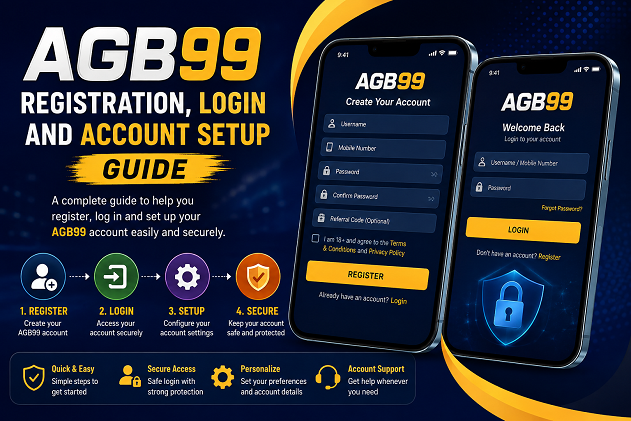
Online gaming platforms require users to share account information, create login credentials, and sometimes manage financial transactions. As a result, account security should be considered an essential part of the overall online gaming experience. For anyone using or considering AGB99, understanding basic account-safety practices can help reduce the risk of unauthorized access, phishing, privacy problems, and financial fraud.
Account safety is not limited to choosing a strong password. It also involves protecting verification codes, securing mobile devices, recognizing suspicious messages, using legitimate applications, monitoring account activity, and being careful when handling payment information.
This guide explains important account safety practices that AGB99 users should understand before and during their use of an online gaming platform. Because specific security features can change over time, users should always verify the current options and requirements provided through the legitimate platform.
Why Account Safety Matters for AGB99 Users
An online account may contain more information than users initially realize. Depending on the service and applicable regulations, an account could involve a username, contact information, account history, transaction records, payment details, and identity-verification information.
If unauthorized individuals gain access to an account, they may attempt to change account settings, access private information, or misuse available financial functions.
For this reason, AGB99 users should treat their account credentials and personal information as confidential.
Good security begins before the first login and continues every time the account is accessed.
Choose a Strong AGB99 Password
A strong password is one of the most basic protections available to an account holder.
When creating an AGB99 account, users should choose a password that is difficult to guess and unique to that account. Passwords should not be based on easily available information such as a name, birthday, phone number, or simple numerical sequence.
Password reuse should also be avoided. Using the same password for gaming, email, social media, and financial services means that a breach of one account could potentially affect several others.
A password manager can help users create and securely store different passwords for different services.
Most importantly, a password should never be shared with another person.
Protect Your AGB99 Login Credentials
The AGB99 login is the main gateway to the account, so users should be careful about where and how they enter their credentials.
Users should access the platform through a verified website or legitimate application. They should be cautious when an unexpected message provides a login link.
Phishing websites can imitate genuine login pages and attempt to collect usernames and passwords.
If a message claims that an account requires immediate verification, users should avoid clicking the included link and independently access the service to determine whether the notification is genuine.
Never Share Your Password
A legitimate support process should not require users to publicly disclose their passwords.
Users should never send their AGB99 password through social media, messaging applications, email, or other informal communication channels.
This rule should apply even when someone claims to be a customer-service representative, account manager, agent, or technical specialist.
If someone asks for a password, the request should be treated as suspicious until independently verified.
Protect Verification Codes
One-time passwords and verification codes can provide an additional layer of security, but only when they remain confidential.
A scammer may claim that a verification code is needed to confirm an account, process a withdrawal, activate a bonus, or prevent an account from being suspended.
Users should not share such codes with another person.
If a code arrives unexpectedly, users should first determine why it was generated. An unexpected verification code can sometimes indicate that someone is attempting to access the account.
Enable Additional Authentication When Available
Some online services offer multi-factor authentication or similar security features.
If an additional authentication option is legitimately available within the AGB99 account, users should consider enabling it.
This can provide an additional barrier because an attacker may need more than a password to access the account.
However, additional authentication is not a replacement for good security habits. Users must still protect their passwords, verification codes, recovery information, and devices.
Secure the Email Account Connected to AGB99
An email address associated with an account can be important for password recovery and security notifications.
If an attacker gains access to the user’s email account, they may potentially attempt password resets or intercept important account communications.
For this reason, users should protect their email account with a strong, unique password and additional authentication where available.
Users should also avoid using an email account that they no longer control as their recovery address.
Keep Your Mobile Device Secure
Many users access online gaming platforms through smartphones, making device security particularly important.
A phone can contain saved passwords, email accounts, payment applications, personal photographs, documents, and other sensitive information.
Users should protect their smartphone with a secure screen lock and keep the operating system updated.
Automatic updates can help ensure that important security fixes are installed when they become available.
Be Careful With the AGB99 App
Users should verify the source of an AGB99 app before installing it.
The appearance of the AGB99 name in an application does not automatically prove that the application is legitimate. Unofficial applications can potentially collect personal information, contain malicious software, or expose users to fraudulent services.
Users should be particularly cautious about applications distributed through unknown websites, messaging groups, or social-media accounts.
Modified applications promising guaranteed winnings, special access, unlimited bonuses, or secret features should be treated with skepticism.
Avoid Unverified APK Files
Android users may encounter APK files claiming to provide access to AGB99.
An APK downloaded from an unknown source can introduce additional security risks because users may not know whether the software has been modified.
Before installing any application, users should verify its source and consider the permissions it requests.
If an application requests access to information or device functions that appear unrelated to its purpose, users should reconsider installing it.
Review Application Permissions
Privacy and account safety are closely connected.
Applications may request access to features such as notifications, storage, camera, microphone, contacts, or location.
Users should consider whether requested permissions are necessary.
They can also review application permissions through their smartphone’s privacy settings and remove permissions that are no longer required where the operating system permits it.
This can help reduce unnecessary exposure of personal information.
Recognize Phishing Messages
Phishing is a common method used to steal account information.
A fraudulent message may claim to come from AGB99 and tell the user that a login attempt occurred, a withdrawal requires verification, or an account is about to be suspended.
The message may contain a link to a fake website.
Warning signs include unusual website addresses, unexpected attachments, urgent language, requests for passwords, and demands for immediate payment.
Users should verify suspicious messages independently rather than responding directly.
Beware of Fake Customer Support
Scammers sometimes impersonate customer-service representatives.
A fake support representative might contact an AGB99 user through a messaging platform and ask for login credentials, verification codes, identity documents, or payment information.
Users should not trust a support request simply because the person knows the user’s name or account details.
Support should be accessed through recognized and independently verified channels.
Protect Personal Information
Users should avoid sharing unnecessary personal information.
Depending on applicable requirements, an online gaming platform may request information for account management, age verification, identity verification, fraud prevention, or legal compliance.
However, users should distinguish between legitimate verification and suspicious requests.
Identity documents should not be sent to unknown individuals through personal messaging accounts.
The same principle applies to phone numbers, email addresses, payment information, and account screenshots.
Be Careful With Account Screenshots
Screenshots can accidentally expose sensitive information.
An AGB99 account screenshot might contain a username, balance, transaction details, phone number, email address, or other identifying information.
Before sharing a screenshot publicly or sending it to someone, users should check what information is visible.
Unnecessary sensitive details should be removed or hidden.
Use Payment Information Carefully
Financial transactions require additional caution.
Before making an AGB99 deposit, users should verify the transaction amount and payment method through the legitimate account interface.
Users should not send payment information to unknown individuals simply because they claim to be agents or representatives.
Payment credentials should remain confidential.
Users should also keep records of their transactions so that unusual activity can be identified more easily.
Be Careful With Withdrawal Requests
Withdrawal-related scams can involve claims that users need to pay an unexpected fee or provide additional credentials before receiving funds.
Users should verify withdrawal requirements through legitimate account procedures.
They should never provide their password or one-time verification code to another person as a condition for processing a transaction.
If a request seems unusual, users should pause and independently verify it before taking action.
Avoid Public or Untrusted Devices
Logging into a private account from a shared or public computer can create additional risks.
Public devices may contain malicious software, saved credentials, or browser extensions that users cannot control.
If accessing an account from a shared device is unavoidable, users should avoid saving passwords and should log out completely afterward.
Where possible, sensitive account activity should be performed using a trusted personal device.
Be Careful With Public Wi-Fi
Public Wi-Fi can introduce security concerns, particularly when users are entering login or payment information.
The name of a Wi-Fi network does not guarantee that it is legitimate or secure.
Users should preferably use a trusted private connection when managing sensitive accounts.
They should also avoid entering important credentials through unfamiliar networks whenever possible.
Monitor AGB99 Account Activity
Regular monitoring can help identify suspicious activity early.
Users should review available account information and check whether deposits, withdrawals, login activity, or account changes correspond to their own actions.
If an unfamiliar transaction appears, it should not be ignored.
Users should secure the account and investigate the activity through legitimate support or financial channels.
Keep Software Updated
Security updates are an important part of account protection.
Users should keep their operating system, browser, security software, and legitimate gaming application updated.
Older software may contain known vulnerabilities that newer versions have addressed.
Automatic updates can be useful because they reduce the likelihood of important security patches being overlooked.
Avoid Suspicious Promotions
Online gaming users may encounter advertisements or messages promising unusually large bonuses, guaranteed winnings, or exclusive access.
Such claims should be treated cautiously.
A promotion should not be considered legitimate simply because it uses the AGB99 name or displays familiar branding.
Users should verify promotional information through legitimate platform channels before providing personal information or making a financial transaction.
Do Not Chase Gambling Losses
Account safety also involves financial self-control.
Users should establish a fixed entertainment budget before participating in gambling activities.
If money is lost, users should avoid increasing their spending simply to recover previous losses.
Chasing losses can lead to increasingly risky decisions and may create financial difficulties.
Essential expenses such as rent, food, education, bills, and emergency savings should never depend on gambling results.
Set Time and Spending Limits
Mobile accessibility can make it easy to spend more time or money than originally intended.
Users can establish limits before beginning a gaming session and should respect those limits.
Taking regular breaks can also help maintain awareness of time and spending.
If gaming begins interfering with work, education, sleep, relationships, or financial responsibilities, taking a break is important.
What to Do if Your Account Is Compromised
If an AGB99 user suspects that someone else has accessed the account, prompt action is advisable.
The password should be changed through the legitimate platform interface. If the same password was used elsewhere, those accounts should also be secured.
Users should review account activity for unfamiliar transactions or changes.
If payment information may have been exposed, the relevant payment provider or financial institution should be contacted through its verified communication channel.
Users should also be cautious of people who offer to recover accounts in exchange for upfront payments.
Common AGB99 Account Safety Mistakes
Several simple mistakes can weaken account security. These include reusing passwords, sharing verification codes, clicking unknown login links, installing unofficial applications, and trusting strangers who claim to provide account support.
Another common mistake is ignoring unusual account activity.
Security works best when users respond early rather than waiting until a problem becomes serious.
Frequently Asked Questions About AGB99 Account Safety
How can I keep my AGB99 account secure?
Use a strong and unique password, protect verification codes, secure your email account and mobile device, avoid suspicious links, and monitor account activity.
Should I give my AGB99 password to customer support?
No. Passwords should remain confidential. Do not share them with individuals who contact you through unofficial channels.
Is every AGB99 app legitimate?
No. Users should verify the source of an application before installing it and should avoid modified or unknown APK files.
What should I do if I receive an unexpected verification code?
Do not share the code. Check whether you recently initiated a login or account action. If not, secure your account and investigate through a legitimate channel.
How should I protect AGB99 payment information?
Use verified payment procedures, carefully check transaction details, avoid sharing financial credentials, and monitor transaction activity.
Can strong security guarantee that an account will never be compromised?
No security measure can provide an absolute guarantee. Layered protection and careful user behavior can, however, reduce common risks.
Conclusion
Important Account Safety Tips for AGB99 Users center on a combination of strong credentials, privacy awareness, device security, careful financial handling, and responsible online behavior. Account protection should begin when the user first considers registration and continue through every login and transaction.
A strong, unique password is essential, but it is only the beginning. Users should protect verification codes, secure associated email accounts, enable additional authentication when legitimately available, and keep smartphones and browsers updated.
Users should also remain cautious about fake login pages, suspicious messages, unofficial applications, unknown APK files, and fake customer-support representatives. Personal information, identity documents, passwords, payment details, and authentication codes should never be provided simply because someone requests them.
Financial responsibility is equally important. Users should understand the risks of casino-style gaming, set limits, avoid using essential or borrowed money, and never chase losses.